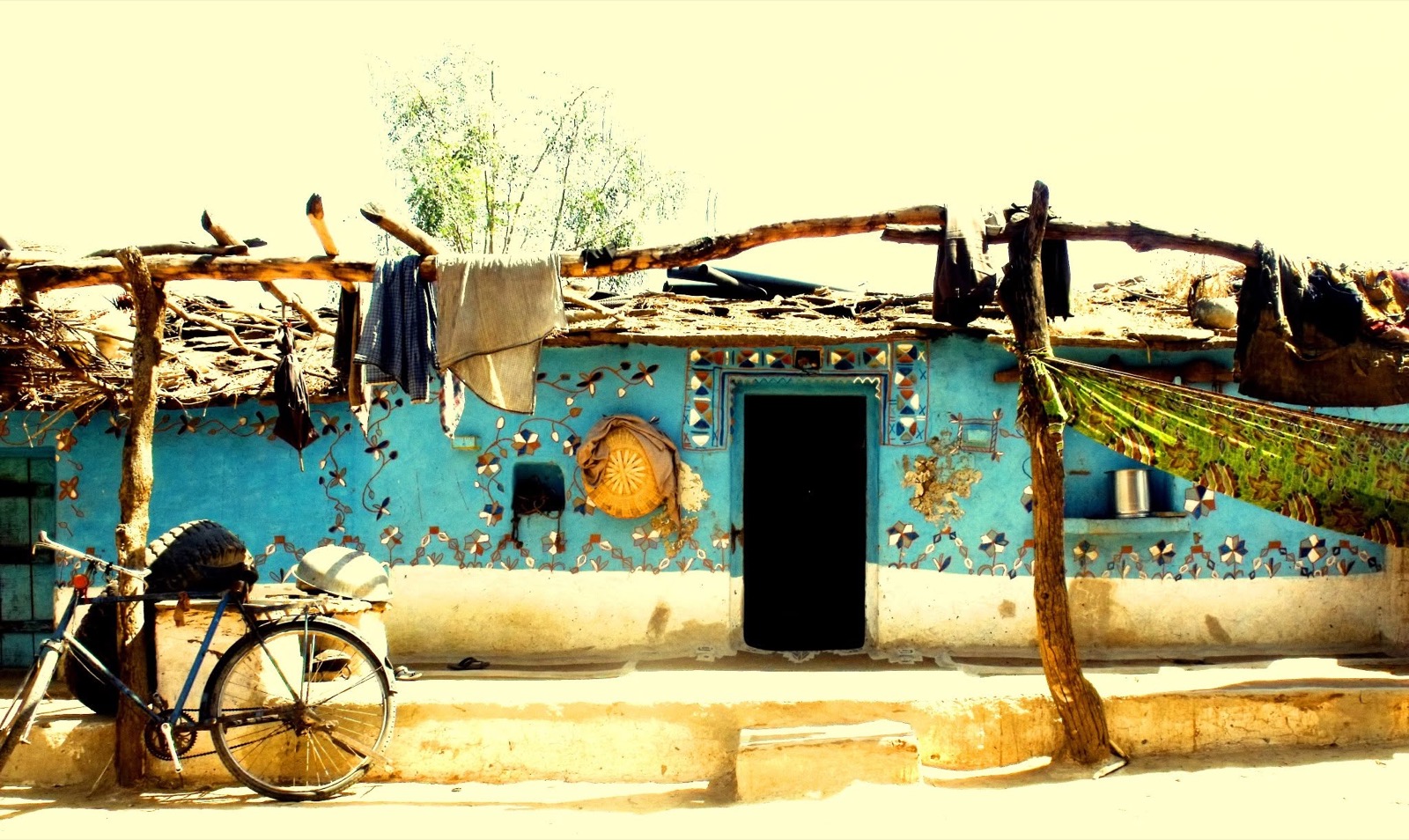
01
The Project
Ways of Seeing brings together projects and conversations around community media and Indigenous media that stand in opposition to conventional media forms. It gathers work that reflects a community’s own perspective rather than a filmmaker’s view from outside — media made through self-reflexive, participatory processes, where the people being represented take part in deciding how they are represented.
The project has three phases, and they should not be collapsed. In 2021 I built a skeleton site as coursework, within a larger conversation on Critical Media Literacy: structure without holdings, and no governance of any kind. In 2024 I began gathering material in collaboration with filmmakers and interlocutors in Ranchi, which is when questions of consent, attribution, and access became real rather than hypothetical. In 2026 I drafted the First Principles to answer the questions that work had already raised in practice.
What you see here is the project’s public index: a catalog of films, collectives, platforms, documents, and scholarship that their makers have already published, with links to where they host them. The archive points rather than possesses. Its holdings — field material gathered since 2024 — are governed separately, and are not published here until the people they belong to decide how, or whether, they should circulate.
With AKHRA
This archive would not exist without the AKHRA collective in Ranchi. Biju Toppo and Meghnath, who founded AKHRA in 1996, and the filmmaker and editor Rupesh Kr Sahu gave me access to the collective’s films, papers, and workspace, and opened for me a world of texts and materials on the Adivasi question in India that I would not otherwise have found. Much of the reading and many of the films gathered here reached me through them, and I am grateful for their generosity, their patience, and their trust.
That work is also the ground of my doctoral dissertation at UCLA, Indigenous Interfaces: Visual Sovereignty, Digital Archives, and Adivasi Mediascapes in Jharkhand, India, which examines how Adivasi media collectives create visual counter-archives through participatory filmmaking, with AKHRA at its centre (see Research). Ten of the collective’s films, from Development Flows from the Barrel of the Gun (2003) to Rupesh Kr Sahu’s Rat Trap (2022), are now held by UCLA Library, where students and researchers can watch them. The questions that raises — who describes a collective’s work, and on whose terms — are part of what the First Principles try to answer.
02
Framework: Who Holds the Camera, Who Keeps the Record
The archive takes its name from John Berger’s Ways of Seeing, which insisted that “the relation between what we see and what we know is never settled.” Berger was writing about oil painting and advertising, but his premise runs through everything gathered here: an image is never simply a record of what was in front of the lens. It carries the position of the one who made it, and the purposes of those who circulate and keep it. This essay sets out the scholarship that shapes how I read and organize the collection. It moves through six conversations, most of which appear as strands in the Readings.
Indigenous media and the question of sovereignty
Faye Ginsburg’s early work framed the dilemma that Indigenous media still carries. In “Indigenous Media: Faustian Contract or Global Village?” (1991), drawing on Aboriginal media groups in Central Australia, she asked whether the camera and the broadcast signal would erode Indigenous cultures or become tools for sustaining them. Her answer was neither naive nor fatalistic. In “Embedded Aesthetics” (1994) she argued that such work could not be judged by the textual standards of film criticism alone, because its value lay in how it was embedded in community relations: who made it, with whose permission, and for whom.
Jolene Rickard gave that argument its political name. In “Sovereignty: A Line in the Sand” (1995) she read Native photography as a record of political and spiritual sovereignty, moving the frame from victimization to resistance and self-determination. Michelle Raheja developed the idea as visual sovereignty in “Reading Nanook’s Smile” (2007), showing how Indigenous filmmakers such as Zacharias Kunuk take up the conventions of ethnographic film and revise them from inside. The collection Media Worlds (2002) placed these projects within a wider anthropology of media, alongside state broadcasting and the transnational travel of film and television.
I hold this lineage close because the films in the Screening Room, including my own, sit uneasily inside it. A film I direct in an Adivasi village is not Indigenous media in Rickard’s or Raheja’s sense, however participatory the process. The archive keeps that distinction visible: my own work is marked as the curator’s, and the collectives that make media on their own terms — among them AKHRA in Ranchi, Vídeo nas Aldeias in Brazil, and Isuma in Igloolik — are catalogued as the primary makers they are.
Community media in India
In India the history of self-representation runs as much through sound as through image. Vinod Pavarala and Kanchan Malik’s Other Voices (2007), the first systematic study of community radio in the country, includes the Alternative for India Development project in Daltonganj, Jharkhand, whose programme Chala Ho Gaon Mein was made in Magahi with its listeners. Their later edited volume, Community Radio in South Asia (2020), follows the form across policy, spectrum, gender, and conflict. The archive’s audio records — CGNet Swara’s voice portal, reachable from any mobile phone, and Asur Adivasi Mobile Radio, broadcasting in an endangered language in the weekly markets around Netarhat — are here because of this history: community media in central India is often built for the phone in the hand, not the screen.
Akash Poyam’s “A Resurgent Adivasi Media Is Setting Its Own Terms” (2021) describes the present of that history: independent platforms created and run by Adivasi journalists in response to the mainstream press’s exclusions. Alpa Shah’s ethnography of Jharkhand, In the Shadows of the State (2010), is the necessary counterweight. She shows how indigenous-rights activism and environmental conservation, however well meant, can reproduce the class divisions that marginalize the poorest people they claim to speak for. Any archive that gathers “Adivasi voices” has to ask which voices, gathered by whom, and at whose expense.
AKHRA’s own account of its work complicates any tidy line between protest and development. In a 2012 interview for a Leipzig exhibition catalogue, Meghnath describes filmmaking as an extension of social work, and sets the collective’s protest films, such as Development Flows from the Barrel of the Gun, beside what he calls “constructive” films. Ek Ropa Dhaan, a film on rice intensification made for the NGO PRADAN, is one of these. The same hands made both, for different audiences and under different terms of access, and the archive keeps them side by side rather than sorting one into activism and the other into extension work.
Biju Toppo has also written about the collective’s practice. In “To Walk Is to Dance, to Speak Is to Sing” (2025), Biju Toppo and Aparna Sharma read AKHRA’s films of Adivasi dance, where walking, speaking, dancing, and singing are continuous. The range of that practice runs from festival films such as Sohrai and Karama, to animated Munda creation stories told by Ramdayal Munda (Srishtikatha), to Rupesh Kr Sahu’s Rat Trap on the rat-hole coal miners of Jharkhand.
The state’s record
Community archives define themselves against something, and in Jharkhand that something has a name and an address. The Tribal Welfare Research Institute in Ranchi, now named for Ramdayal Munda, has published ethnographies of the state’s communities since the 1950s, and makes many of them freely available. Read in sequence, they are a record of how the state has looked. The Chero (1973) frames its subject through “acculturation”; The Asur: Ethno-Biological Profile (1976) measures named Asur men for racial classification; later journal issues (2008, 2018) turn to livelihoods, schemes, and the Institute’s own role in documenting folk literature. I catalog these as documents rather than as scholarship, with notes on their framing, and next to the media communities make about themselves. The Asur of the 1976 monograph are also the Asur who broadcast in their own language on Asur Adivasi Mobile Radio.
Community archives: absence or saturation?
The second half of the archive’s question — who keeps the record — belongs to archival studies. Michelle Caswell’s “‘The Archive’ Is Not an Archives” (2016) is a useful warning to anyone arriving, as I did, from the humanities: the “archive” of critical theory is a metaphor, while archives are institutions with practitioners, standards, and a scholarship of their own. Andrew Flinn, Mary Stevens, and Elizabeth Shepherd’s “Whose Memories, Whose Archives?” (2009) studied grassroots archives in Britain and the value their makers placed on autonomy from mainstream heritage institutions.
Caswell, Marika Cifor, and Mario H. Ramirez’s “To Suddenly Discover Yourself Existing” (2016), based on interviews about the South Asian American Digital Archive, argues that community archives counter the “symbolic annihilation” of marginalized groups — George Gerbner’s term, developed by Gaye Tuchman, for the ways mainstream media ignore, misrepresent, or malign them — and produce what the authors call representational belonging.
This is the argument I most need, and the one that fits Jharkhand least. Symbolic annihilation is the harm of being missing from the record. Adivasi representation runs the other way, toward saturation: the communities in this archive have been documented by survey, census, welfare administration, and philanthropic reporting for more than a century, as the state’s own publications show. The archive is too full of the wrong image. The remedy for absence is collection; the remedy for saturation is not more collection but control over description, circulation, and the terms on which people appear. That shift, from gathering to governing, is what the First Principles try to make operational. Pad.ma, the Public Access Digital Media Archive, offers a practical model from closer to home: footage kept whole and densely annotated, in an archive that calls itself non-state.
Openness, protocol, and data governance
Digital archives tend to assume that more access is always better. Kimberly Christen’s “Does Information Really Want to be Free?” (2012) contests that assumption by bringing the history of collecting, and the politics of how Indigenous knowledge circulates, into debates about open access and intellectual property. Her “Why the ‘s’ Matters” (2015) argues that copyright and Creative Commons licences cannot express Indigenous conditions of use, and presents Traditional Knowledge Labels as a complement. Those Labels are now maintained by Local Contexts, and the same commitments are built into Mukurtu, the platform Christen developed with Warumungu community members. Jennifer Wemigwans’s A Digital Bundle (2018) extends the argument from within Indigenous knowledge practice, treating online knowledge as a bundle carried under cultural protocol and responsibility.
The CARE Principles for Indigenous Data Governance (Carroll et al. 2020) turn these arguments into commitments: Collective benefit, Authority to control, Responsibility, and Ethics, designed to sit alongside the technical FAIR principles. They are the reason this archive links rather than copies, honours makers’ restrictions, and applies no Labels of its own. Those rules are set out under First Principles.
Critical media literacy
The archive began as teaching material, and it remains one. Douglas Kellner and Jeff Share’s The Critical Media Literacy Guide (2019) links the politics of representation to critical pedagogy: learners analyse how media construct the world, and then make media that construct it differently. That is the use I intend for this collection. The paths, records, and readings are meant to be taught with, so that a student meeting an AKHRA documentary on mining in Jharkhand also meets the questions of authorship, access, and custody that surround it.
03
Paths Through the Archive
Five curated paths organize the collection. The first three carry forward the archive’s original structure; the last two name the questions that structure has always been asking. Choose a path to filter the catalog below.
04
Catalog
Every record follows the same metadata model (described under First Principles).
Filter by type, path, or region, search across all fields, and open any record for its full metadata and a
ready-to-copy citation. Each record has a permanent identifier — add it to this page’s address
(for example, #WOS-001) to link straight to it.
05
Screening Room
Films I have made with communities in Jharkhand, Chhattisgarh, and Odisha. These are where the archive’s questions — about authorship, participation, and whose viewpoint a document carries — were first worked out on location, before they became questions about infrastructure.
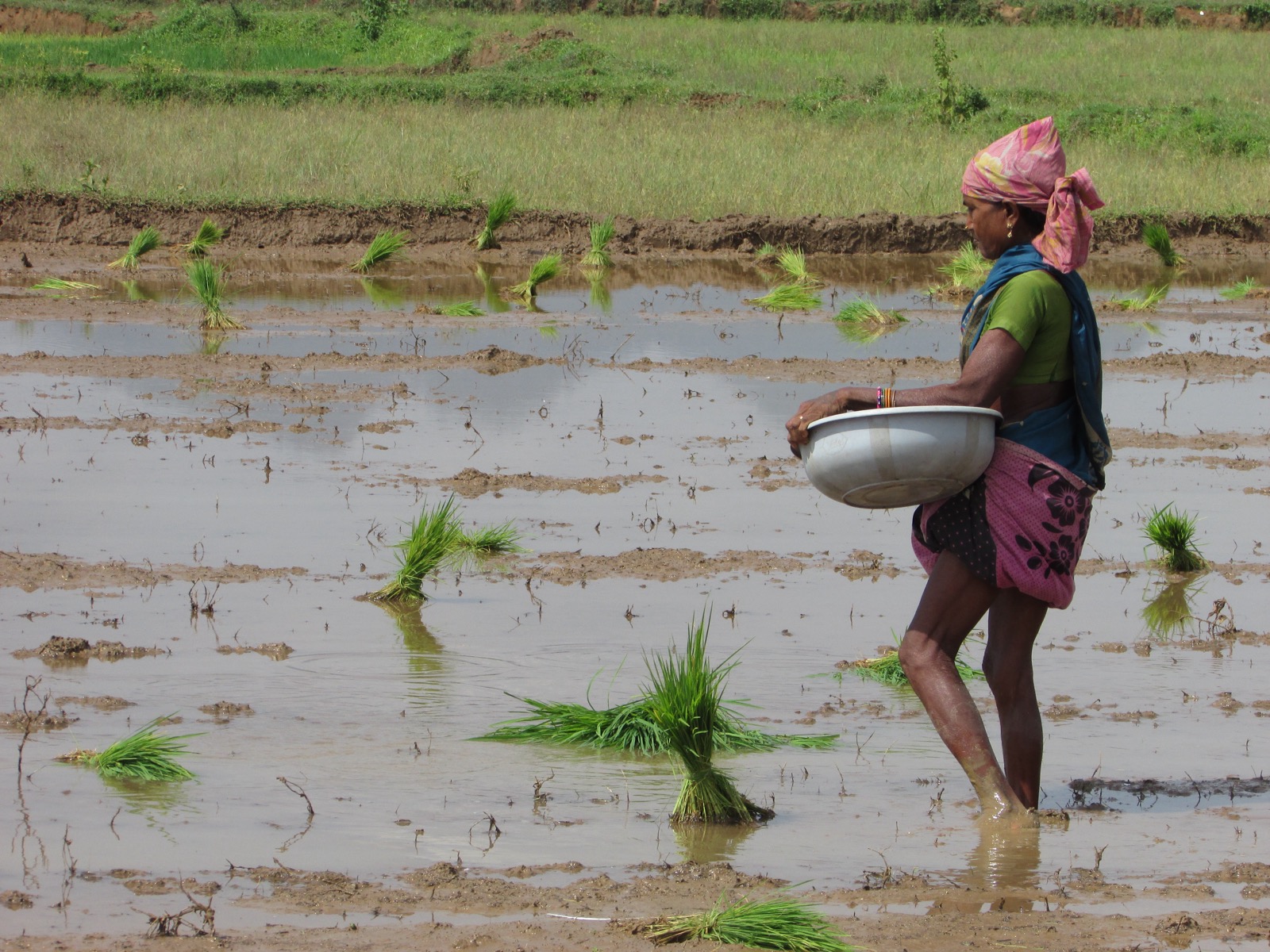
Ayangraji
Alternative agriculture, rice cultivation, and community-supported markets in Radidih, Gumla district, Jharkhand.
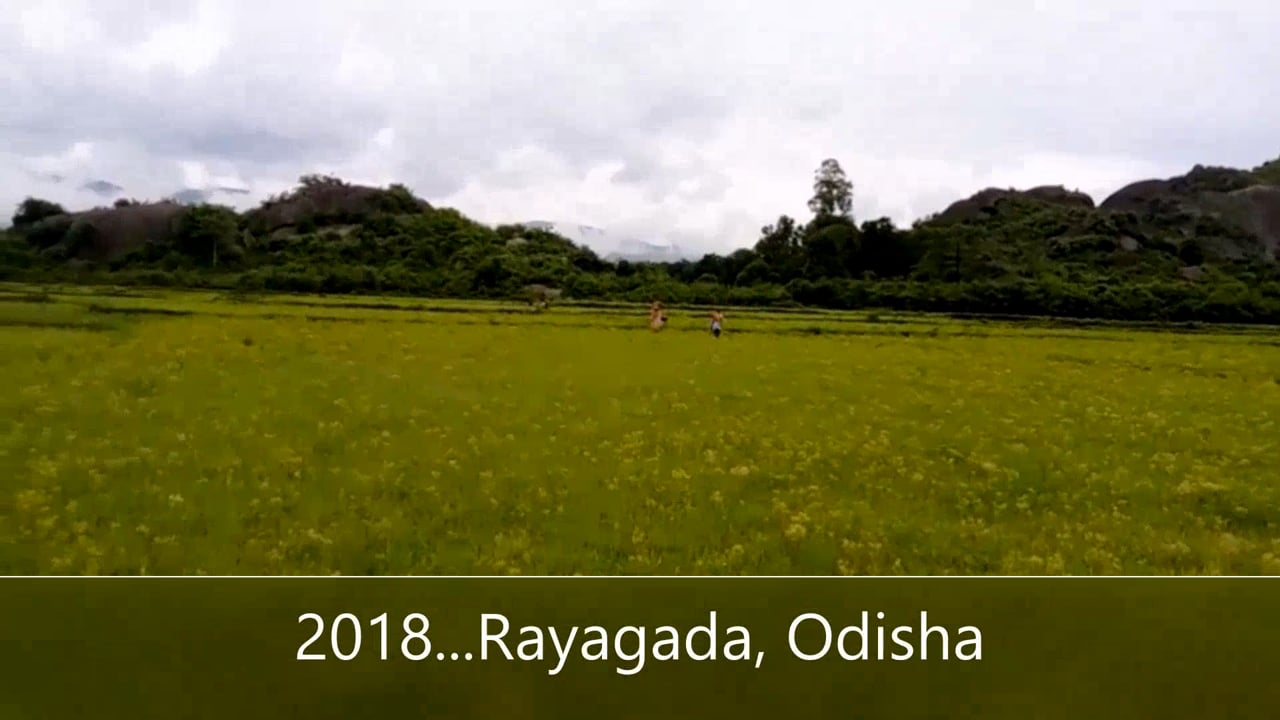
Envisioning Development Practice
Three practices across the Adivasi belt of Odisha, Chhattisgarh, and Jharkhand, told without narration and without a result.
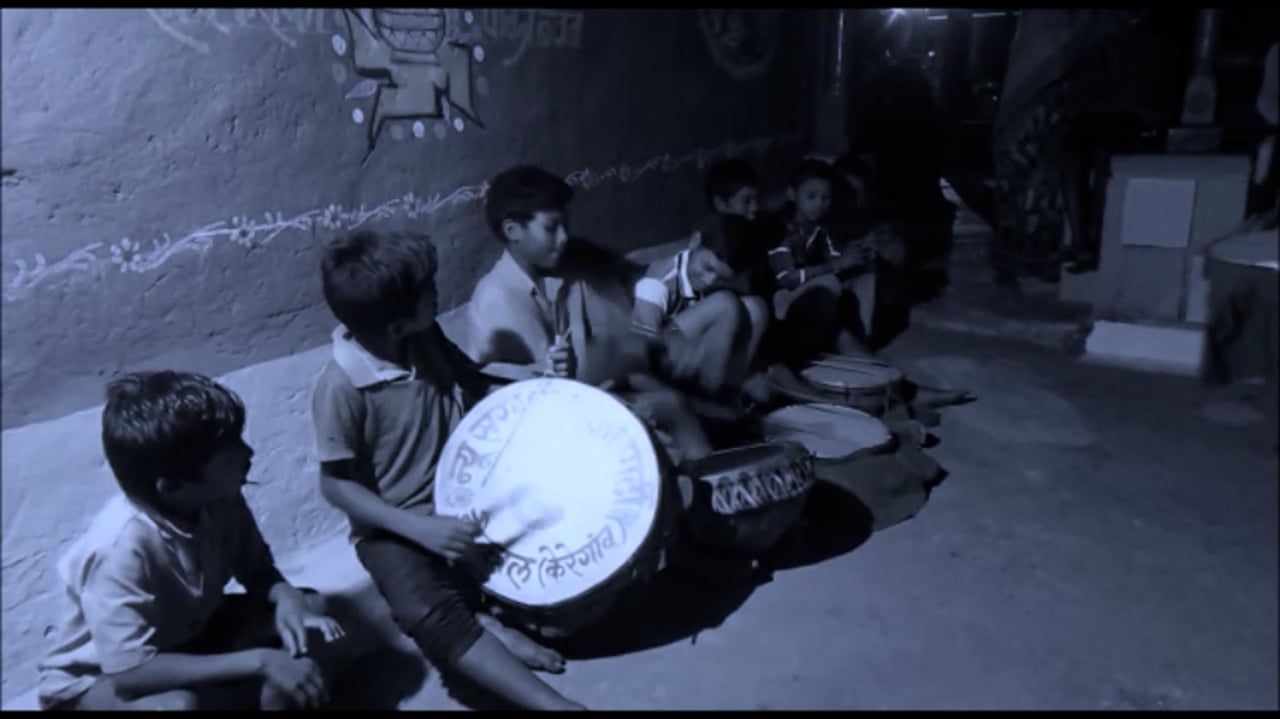
Chinhari: The Young India
An Adivasi youth collective in Dhamtari, Chhattisgarh, and the care groups its young women built.
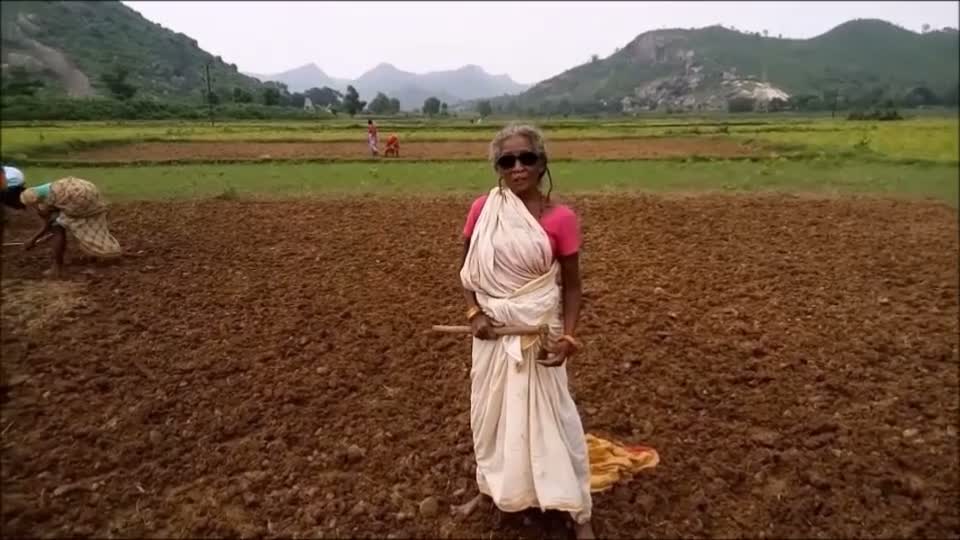
Eka Nari Sangathan
A single women’s association in Emaliguda, Rayagada, Odisha, and the solidarity its members build with one another.
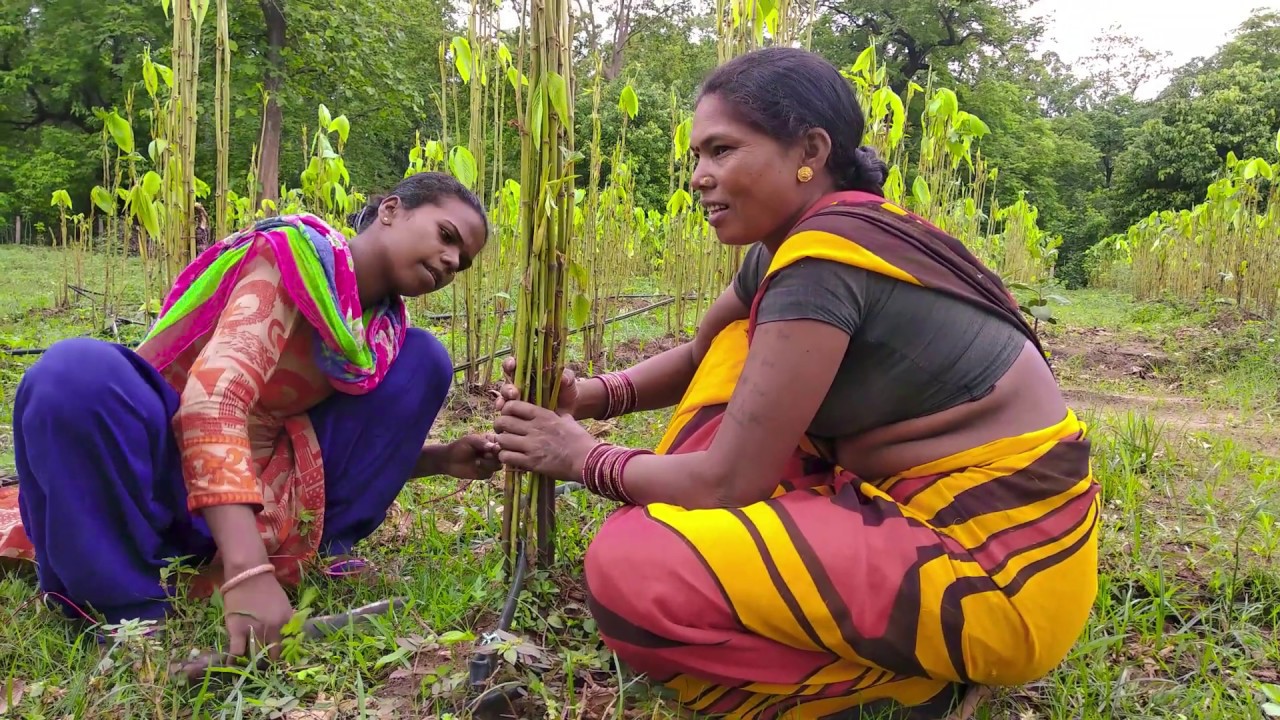
Inoculating Lac
Lac cultivation and the inoculation process at the center of Bhanupratappur’s lac economy, Chhattisgarh.
From the collection
Full-length films from the catalog, streamed from their makers’ own channels. Each links to its source and to its catalog record.
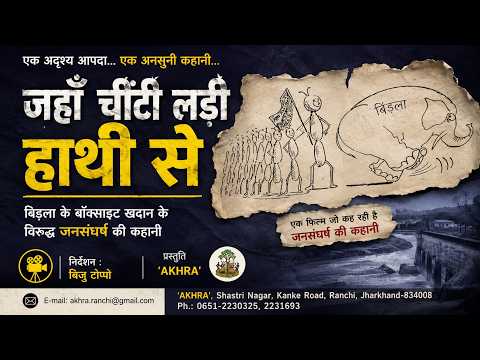
Jaha Chhiti Ladi Hathi Se
Indigenous peoples’ struggle against bauxite mining.
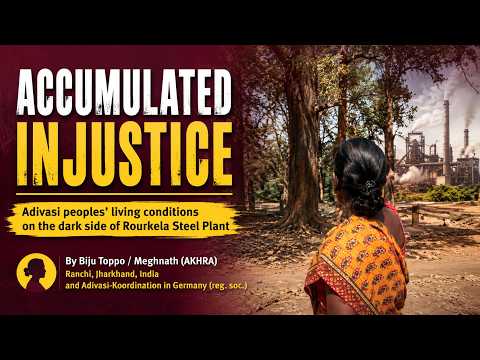
Accumulated Injustice
Adivasi lives on the dark side of the Rourkela Steel Plant.
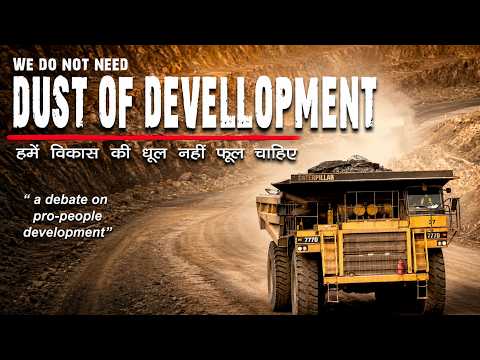
We Do Not Need Dust of Development
What development owes “the last person of the village” after mineral exploitation.
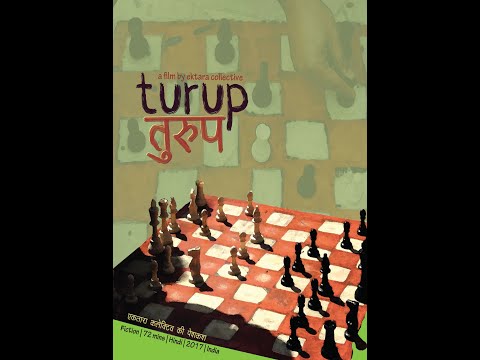
Turup
A neighbourhood chess game opens onto caste, class, religion, and gender in Bhopal.
At AKHRA, Ranchi
Photographs I took in AKHRA’s studio and workspace in Ranchi, where several of the films in this archive were edited. I show the rooms and the equipment only; the people who work here are not pictured.
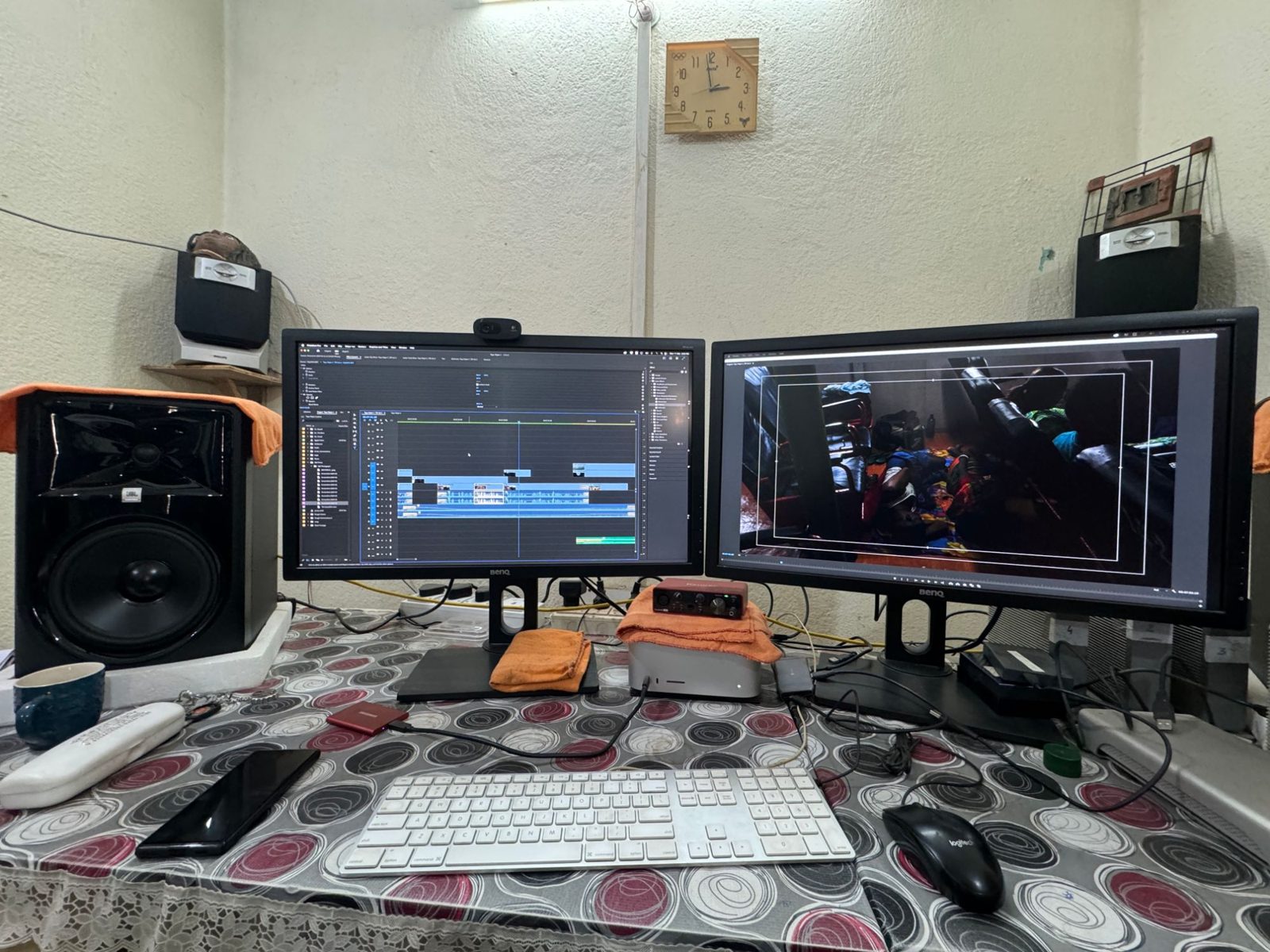
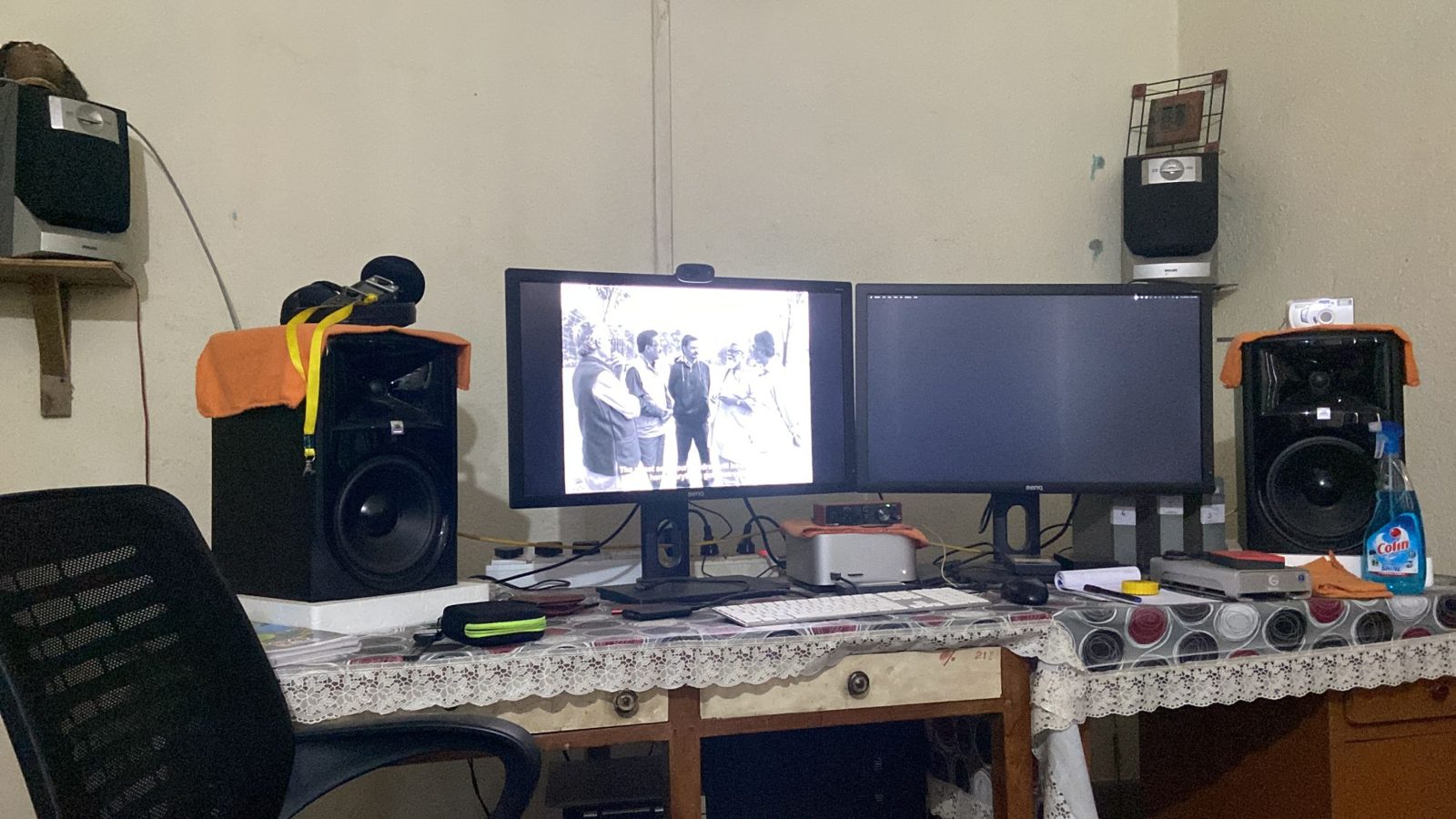
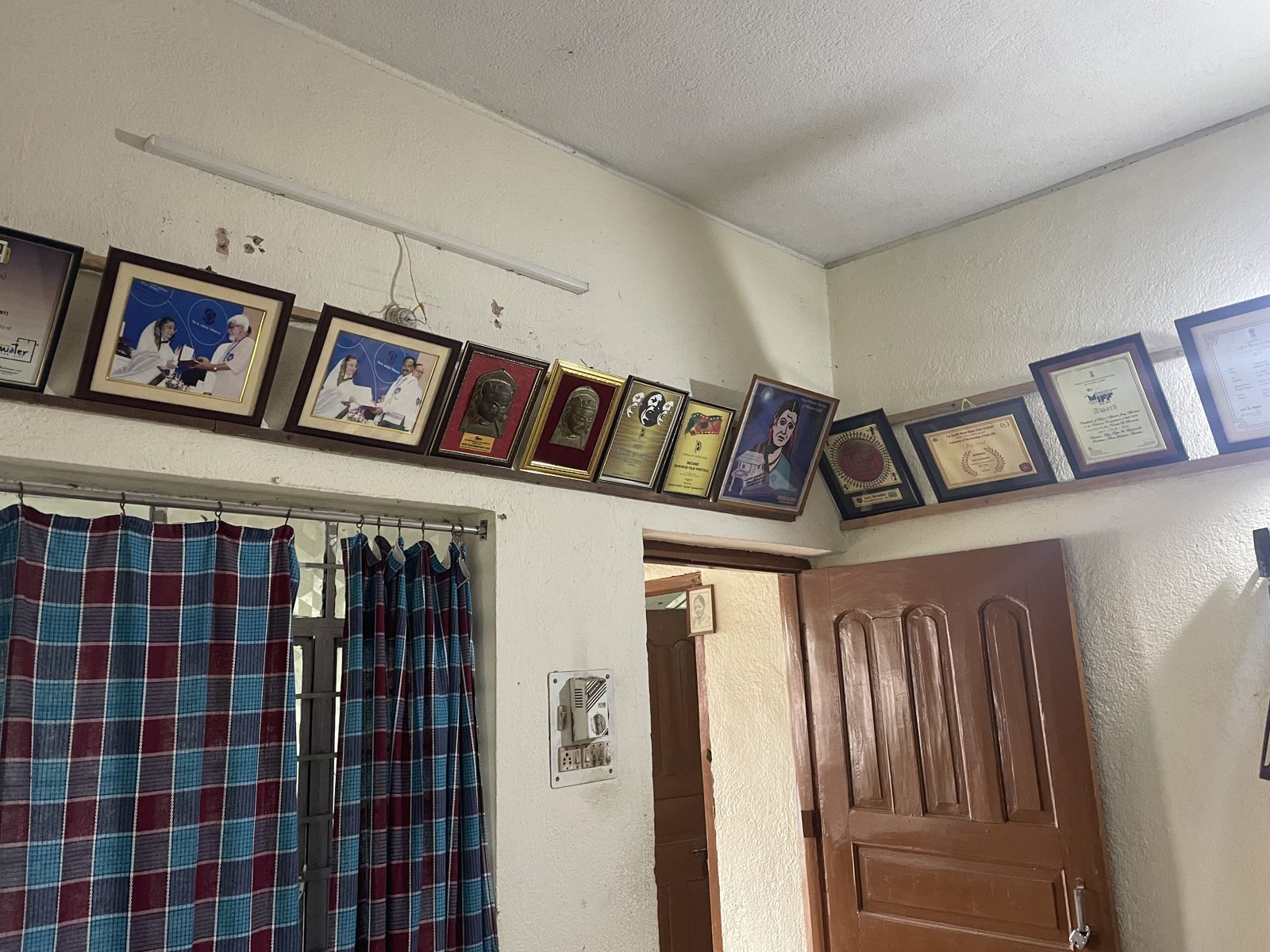
Photographs © Arpit Gaind. Please ask before reusing them.
06
Readings
An annotated bibliography of the scholarship behind the Framework, grouped by strand. Each entry links to the text and to its catalog record. My own writing is catalogued separately under the curator’s records.
07
First Principles
This section states what the project is for, who decides what it holds, and on what terms material enters and leaves it. It is written to be argued with. Any principle here that cannot survive being read aloud to the people whose material it governs should be struck.
The principles were not designed in advance and then implemented. I drafted them in 2026, after the 2024 work in Ranchi had already raised the questions they answer, and some of them revise decisions already taken. They are a codification of working practice under repair, not a founding charter. Where a principle describes intent rather than operation, it says so.
Index and holdings
The project has two parts, and they are governed differently. The index is the public catalog on this page: descriptions of work its makers have already published, with links to where they host it. The holdings are field material gathered with filmmakers and interlocutors in Ranchi since 2024. The holdings are governed by the principles below, and none of them is published here yet. The index follows four narrower rules:
The index points to work where its makers host it. It does not download, re-host, or re-edit anyone else’s media.
Where a maker restricts access, the record says so and the restriction stands. Nothing is opened up by being indexed here.
Every record names its makers as they name themselves, and credits the collective or community before the platform.
Any maker or community can ask for a record to be corrected, reframed, or removed, and the request will be honoured.
The problem: saturation, not absence
Representation of Adivasi communities in Jharkhand has been organized by external framing: colonial ethnography, state administrative categories, and development reporting. The reduction to administrative form is not a distortion the record can correct by adding detail, because the categories are the instrument through which resources are released and populations managed.
The archival condition this produces is not absence. Critical archival studies names symbolic annihilation as the harm of being missing from the record. Adivasi representation runs the other way, toward saturation: over-documented by survey, census, welfare administration, and philanthropic reporting. The archive is too full of the wrong image. The remedy for absence is collection; the remedy for saturation is not more collection but control over description, circulation, and terms of appearance.
The region’s recent history adds three kinds of loss: material that left through circulation and was not returned, material lost to storage conditions and changes of medium, and material preserved abroad under descriptive standards devised elsewhere — a better outcome than loss, and not the same thing as custody. A fourth condition is the sharpest. Material about these communities is now easier to reach from another continent than from the districts it documents. Any principle that improves preservation without improving local reach has answered the smaller half of the problem.
Five principles
Each is stated with its mandate, the test by which a failure to meet it would be visible, and its sources. A principle without a failure condition is a slogan.
-
Community control over terms of appearance
Decisions about what the archive collects, how items are described, who may see them, and how they may be reused rest with the communities and creators whose material it holds. Institutional partners may hold copies. They do not set terms.
Test of failure A decision about access, description, or reuse is taken without a named community decision-maker recorded against it.
Known limit CARE and OCAP were developed in settler-colonial jurisdictions and presuppose a community with recognized standing to assert governance rights. Jharkhand’s Adivasi communities hold Scheduled Tribe status under the Indian Constitution, a different instrument with different consequences. The principles are adopted here as working commitments, not as a claim that the legal ground transfers.
Sources Flinn, Stevens & Shepherd, “Whose Memories, Whose Archives?”; the CARE Principles, especially Authority to Control; the First Nations Principles of OCAP.
-
Collective authorship and appraisal
Authorship is recorded as it was exercised, which in this material is often collective. Where a work has a named maker the name is recorded; where it does not, the collective or community is the author, and no individual is substituted for convenience. Appraisal — the decision about what enters the archive at all — is a community function, not a facilitator function.
Test of failure An item enters the holdings on my judgment alone, or a controlled vocabulary is applied to an item without any community reviewer having seen it.
Known limit The current descriptive vocabulary is mine, and its analytical categories are the ones my research uses. Applying a closed vocabulary written by one person to material owned by many reproduces, at the level of description, the flattening this project was built to resist. The vocabulary is therefore held open: terms are proposals, any contributor may add to them, and no item is blocked for failing to fit an existing term. The contradiction is contained, not resolved.
Sources Caswell, “Seeing Yourself in History”; the culture and communication practice of AKHRA.
-
Recognition before audience
The primary audience is the community the material comes from. Design decisions that serve an outside scholarly or institutional audience at the expense of local legibility are decided against. Language, interface, bandwidth, and device assumptions follow local use rather than the reverse.
Test of failure Use is concentrated outside the state while local access remains untested, or the interface defaults to English where a community language is available. By this test, this page currently fails.
Sources Caswell, Cifor & Ramirez on representational belonging; Godoy, “Community-Driven Archives: Conocimiento, Healing, and Justice”.
-
Circulation intent as a condition of entry
Every item carries a circulation decision made when it enters, not an access setting applied afterward. Open: anyone may reach it. Restricted: available locally and by named request, not published to the open web. Withheld: held under refusal and not listed publicly at all. Withheld is a legitimate and permanent destination, not a queue for later release. Where intent is unknown, the item is restricted.
Test of failure An item is published open with no recorded decision, or a withheld item appears in a public index, search result, or export.
What it does not claim The archive does not depend on any single commercial platform for the availability of its holdings, and offline distribution on physical media continues where connectivity requires it. Broader claims about platforms and Indigenous languages, made in an earlier draft, are withdrawn for lack of evidence.
Sources The losses described above; Simpson, “On Ethnographic Refusal” and Mohawk Interruptus.
-
Oral and sonic material as primary record
Recorded speech, song, and language are catalogued as records in their own right, not as raw inputs awaiting transcription. Language and dialect are recorded for each item. It must be possible to describe an audio record without a transcript, since requiring one makes the record depend on labour the project cannot always fund.
Test of failure Audio items sit unlisted pending transcription, or a dialect is collapsed into a national language label.
Sources Feld, “Acoustemology”; Robinson, Hungry Listening.
Consent, attribution, and refusal
Consent is recorded per item and per person, not per project. A person who agreed to be filmed has not thereby agreed to be named, and a person who agreed to be named in a film has not thereby agreed to be quoted in a publication. These are separate fields because they are separate decisions.
Attribution in the holdings defaults to pseudonymous. An item appears under a real name only where naming consent has been recorded and checked against the field log. This inverts standard practice for a specific reason: several contributors work on land and mining questions in districts where being identified carries risk. For the same reason, the photographs on this page show rooms and equipment, not people.
Where a person’s role or identity is recorded inconsistently across sources, the item is held back until the field record resolves it; publication is not a way of settling who someone is. Consent may be withdrawn. Withdrawal removes the item from public display and from any export, and the archive keeps only a record that something was withdrawn. A right to enter that cannot be reversed is not a right to control.
Governance and the appraisal body
Community control is exercised by people making decisions on the record. Where no body exists to make them, control is exercised by whoever holds the login — at present, me. The proposed appraisal body is small and its remit narrow, because a structure more elaborate than the project can sustain fails quietly and leaves the same person deciding. Its functions, in order of priority:
- Appraisal: deciding what enters the archive and what does not.
- Vocabulary: approving, amending, and retiring descriptive terms, including the ones I have proposed.
- Access disputes: deciding contested tier assignments and hearing requests to reclassify.
- Withdrawal: acting on requests to remove material, without requiring a reason.
Until it exists, three interim rules apply, and they are recorded as interim:
- No item enters the holdings at the open tier without at least one contributor other than me agreeing.
- No new descriptive term is created without the same.
- My own research categories are marked as such, so a later reviewer can see which terms came from the community and which came from a dissertation.
Record model
Index records use a small schema aligned with Dublin Core, so the catalog can be exported to standard archival systems. The one deliberately local element is Path, the archive’s curatorial vocabulary.
| Field | What it records | Dublin Core |
|---|---|---|
| Identifier | Permanent record number, stable across revisions | dc:identifier |
| Title | The work’s own title, in its makers’ spelling | dc:title |
| Creator | Makers, collectives, or authors, as they name themselves | dc:creator |
| Date | Year of release, founding, or publication | dc:date |
| Type | Film, collective, platform, text, document, protocol, festival, library, audio | dc:type |
| Format | Medium and runtime or extent | dc:format |
| Language | Languages of the work | dc:language |
| Coverage | Place — district, state, region | dc:coverage |
| Path | The archive’s curatorial grouping | local vocabulary |
| Subjects | General subject terms | dc:subject |
| Description / note | What the work is, and why it is here | dc:description |
| Access | Open, by request, institutional, or published | dc:rights |
| Source | Where the work lives, at its makers’ address | dc:source |
Holdings records add the fields the principles require. Each field corresponds to a decision someone has to make, and exists so that the decision cannot be skipped.
| Field | Values | Effect |
|---|---|---|
| Origin | Village, block, district | Place at the level the community uses, not only the administrative one |
| Language / dialect | Open list | Dialect recorded, not collapsed into a national language |
| Subject term source | Community / contributor / facilitator research | Shows where each descriptive term came from |
| Information sheet; consent form held | Yes / no | “No” blocks publication |
| Attribution | Pseudonymous / named | Pseudonymous until naming consent is verified |
| Quotation consent | Required / waived | Whether separate approval is needed before quoting |
| Circulation tier | Open / restricted / withheld | Restricted where intent is unknown |
| Decision by | A named person | Who decided the tier; a blank is itself a finding |
| Withdrawn | Yes / no | Removes the item from display and export |
Sustainability
Community archives fail more often from exhaustion than from hostility. This project has no recurring budget, one part-time facilitator, and no institutional host that is not also a party with interests in the material. Four commitments follow, each modest enough to keep:
- Format discipline: holdings are kept in open, widely supported formats, so recovery does not depend on the platform the site runs on.
- Exportability: the catalog can be exported in full to a plain file at any time, and the export respects tiers.
- Redundancy without transfer of control: copies may be held elsewhere for preservation, but a preservation copy carries no right to describe, publish, or license.
- Reversion by default: any agreement with an institution is time-limited and reverts. A term with an end date is the most substantial protection a party with no drafting capacity can keep.
What this does not settle
Four things, recorded so that silence is not mistaken for resolution.
- The appraisal body does not exist. Until it does, community control is a commitment rather than a mechanism, and everything above that depends on collective decision depends on one person choosing to seek it.
- The descriptive vocabulary is mine. Marking each term with its source makes the problem visible; it does not solve it. A vocabulary becomes communal when a community amends it, and none has yet.
- Local reach is unimproved. This archive is easier to reach from outside Jharkhand than from inside it — the asymmetry it was built to answer, reproduced by the project itself. Naming it is not fixing it.
- Material licensed or accessioned elsewhere is governed by those agreements, not by this document, and nothing here overrides an agreement already signed.
Suggest a record, or ask for a change
If you make, hold, or know work that belongs here — or if you are a maker or community member who would like a record corrected, restricted, or removed — write to contact@arpitgaind.com. Removal does not require a reason.
08
Positionality
This platform cannot be detached from my position as an India- and Delhi-based, urban-educated, cisgender man doing doctoral research at a globally recognized university at the heart of the Global West. My academic training in Development Studies and Development Practice shaped my awareness of discrimination, marginalization, and well-being alongside the power dynamics of everyday life.
My background includes collaborative work on culturally sensitive films across Eastern India’s Indigenous regions, including language study among the communities involved. I have engaged in scholarly and community-based artistic projects examining alternative development practices and possibilities of creative expression — questions of media, authorship, and knowledge production.
Being an outsider in Indigenous spaces means constantly negotiating privileges and their dismounting, and the tension between maintaining intellectual distance and avoiding romanticization. I frame this positionality as both an ethical and an intellectual responsibility: to represent diverse voices authentically, and to resist and counter the dominant and exploitative narratives directed at Indigenous communities.
09
Cite This Archive
Gaind, Arpit, curator. Ways of Seeing: An Indigenous Media Archive. 2021–present. https://waysofseeing.in/.
Each catalog record carries its own citation under “Full record.” Skeleton site 2021; field collaboration from 2024; First Principles and structured index 2026.